If you’ve been searching for the epoxy garage floor cost arlington ma homeowners actually pay, you already know the online estimates are all over the place. Some sites throw out a flat number like it’s a fixed price. It isn’t. The real cost depends on your slab condition, size, and how much prep it needs before any coating goes down.
We’ve installed flake epoxy systems in garages across Arlington and the surrounding towns for years. This post breaks down the price ranges, what pushes a job from cheap to expensive, and why the lowest bid almost always turns into the most expensive floor within two winters.
Epoxy Garage Floor Cost Arlington MA Per Square Foot
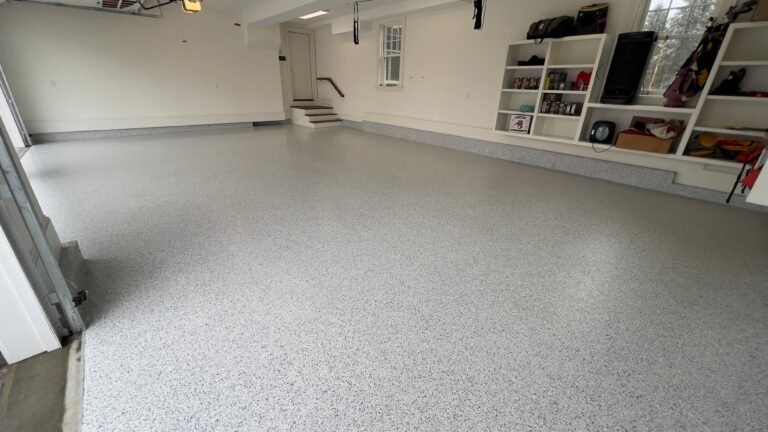
For a standard two-car garage with a slab in reasonable shape, most flake epoxy systems in this market run in a broad per-square-foot range. Note this is a range, not a quote: every slab is different once we grind it and see what’s underneath. A written proposal only comes after we inspect the concrete in person.
- Basic single-coat epoxy with light flake broadcast: lower end of the range
- Full flake broadcast system with polyaspartic topcoat: mid range
- Heavy flake, thicker mil build, and premium topcoat: upper end
Square footage matters more than most people think. A 400 sq ft one-car garage costs more per square foot than a 600 sq ft two-car garage, because mobilization, prep equipment, and material setup don’t scale down proportionally with size.
What Actually Drives Up the Price
The number people see online almost never matches what’s on the slab. Here’s what pushes a job above the baseline range.
- Crack repair. Hairline cracks need routing and filling with a semi-rigid epoxy or polyurea crack filler before any coating touches the floor. Structural cracks may need more than cosmetic repair.
- Moisture in the slab. Arlington has plenty of older garages built directly on grade with no vapor barrier. If a moisture test comes back high, we need a moisture-mitigating primer, which adds material and labor cost.
- Oil staining and prior coatings. Old paint, sealer, or heavy oil saturation means more aggressive diamond grinding prep, sometimes multiple passes, to get a clean mechanical profile.
- Size and layout. Tight garages, columns, floor drains, and stairs all add cutting-in time that a flat square footage number doesn’t capture.
- Coating system chosen. Polyaspartic topcoats cost more than standard epoxy topcoats but cure faster and hold up better to hot tires and road salt.
None of this is upselling. It’s the difference between a floor that’s still bonded in five years and one that’s peeling at the tire tracks by next winter.
Why the Cheap Bid Costs More Later
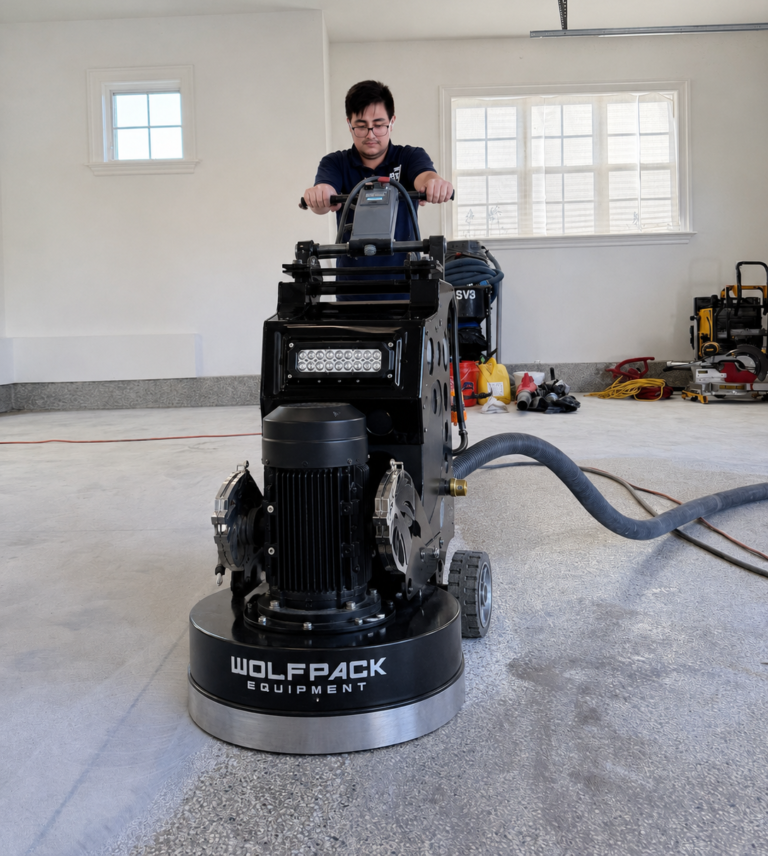
Most low bids skip diamond grinding prep entirely and rely on an acid etch or a light sand instead. Acid etching does not open the concrete pore structure the way mechanical grinding does, and it leaves behind residue that can interfere with adhesion. The result is a coating that looks fine on install day and delaminates in sheets 12 to 18 months later once salt and moisture cycle through the slab.
We grind every slab with diamond tooling regardless of how clean it looks. It’s not negotiable on our end because it’s the single biggest factor in whether a coating stays bonded. According to the American Concrete Institute, proper surface profile preparation is a prerequisite for coating adhesion on concrete substrates, which is why we don’t shortcut this step even on jobs where it would be cheaper and faster to skip it. You can review ACI’s guidance on concrete surface preparation at concrete.org for reference, though our own process follows manufacturer spec sheets for each coating system.
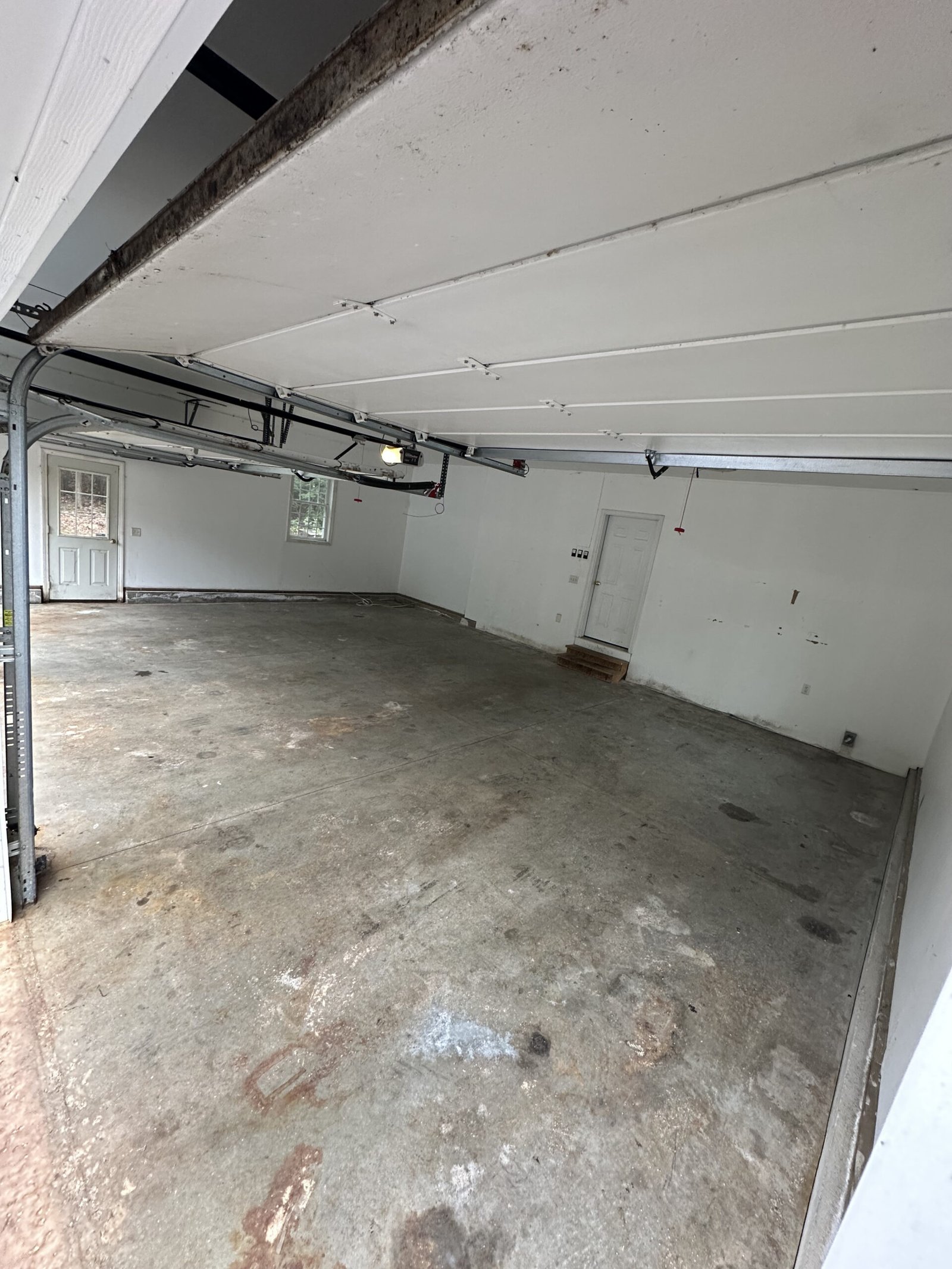
A redo job, stripping a failed coating and starting over, almost always costs more than doing it right the first time. Removing a bonded epoxy layer requires more aggressive grinding, more time, and sometimes patching where the old coating pulled up chunks of the slab surface.
What’s Included in a Real Arlington Estimate
When we quote an epoxy garage floor cost arlington ma project, the number covers diamond grinding prep, crack and joint repair as needed, primer coat, flake broadcast, topcoat, and a written warranty on labor and material. We’re licensed and insured, and that’s documented before any deposit changes hands. If your slab needs moisture mitigation or heavier crack work, we tell you before we start, not after we’ve already ground the floor.
We won’t quote a fixed number over the phone or from photos. Slab condition changes the scope too much, and giving a hard price before grinding the floor is how homeowners end up with change orders mid-project. An in-person walkthrough takes about 20 minutes and gets you a real range plus a written proposal.
If you’re comparing quotes, ask every contractor whether they diamond grind or acid etch, whether the warranty is written, and whether they’re licensed and insured in Massachusetts. Those three answers tell you more about the final cost than any number on a flyer. For details specific to this job type, see our Arlington flake garage floor page.
Comparing Costs in Nearby Towns
Pricing in Arlington tends to track closely with nearby towns, since slab age and construction era are similar across the area. We’ve done comparable flake systems in Belmont and Lexington, and the same prep and pricing logic applies: older slabs with more moisture and crack issues cost more to prep, newer construction costs less.
The bottom line on epoxy garage floor cost arlington ma: budget for a range, not a fixed number, and expect that range to shift once we’ve actually seen your slab. A floor installed with proper diamond grinding prep and a written warranty from a licensed and insured contractor is the only version of this project that holds up long term.